Text File Viewing - made easy
Need a quick and easy way to open TXT files online? Tiiny Host helps you view your text files in no time. No downloads needed, just upload your file and dive right into the text content.
Need a quick and easy way to open TXT files online? Tiiny Host helps you view your text files in no time. No downloads needed, just upload your file and dive right into the text content.
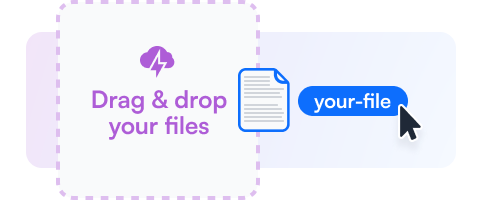
Drag your TXT file or choose the upload option to add it to Tiiny Host.
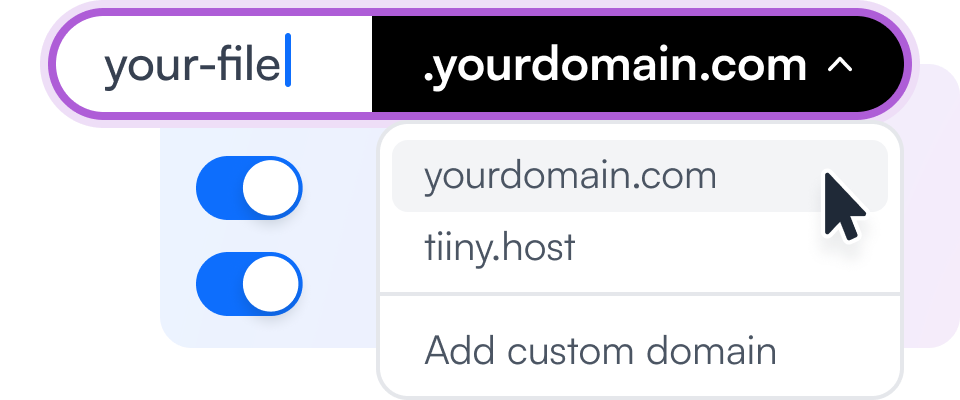
Add a custom link name or additional security features to your file viewing experience.

Get a link to your TXT file to view and share with others.
Easily drag your TXT files to our platform and view them instantly.
Use your own domain to view your TXT files online for a personalized touch.
Get insights on how often and how long your files are viewed.
Secure your text files with a password, keeping them safe and private.
Generate QR codes for easy sharing and accessibility of your TXT files.
Integrate your TXT file viewer into any website or application.


Open your important business reports in TXT format, easily accessible from any device.

Browse through product catalogs saved as TXT files directly online.

View school assignments or study notes in TXT format without needing to download them.
Learn about flat-file CMS and how they relate to managing text files effectively.
Discover ways to securely share files online while maintaining integrity and privacy.
As you continue to work with AWS services, keep in mind the importance of securing your credentials and validating your IAM roles and permissions. By doing so, you'll be well-equipped to tackle the challenges of AWS authentication and ensure the security and integrity of your cloud-based applications.
The /home/*/.aws/credentials file is a specific type of callback URL that holds paramount importance in Amazon Web Services (AWS) authentication. This file is used to store AWS credentials, which are required for accessing AWS services. The file typically resides in the user's home directory, and its presence facilitates the authentication process for AWS CLI and SDKs.
The string is URL-encoded. Let’s break it down step by step:
This string is a designed to exploit Server-Side Request Forgery (SSRF) or Local File Inclusion (LFI) vulnerabilities. Decoded, it translates to callback-url=file:///home/*/.aws/credentials , which instructs a vulnerable application to read and leak sensitive AWS access keys from the server's local storage. 1. Understanding the Payload
To understand the risk, we must decode the URL-encoded string:
A particularly devastating variant of this attack involves manipulating a callback-url parameter using the file:// protocol handler. This article breaks down the mechanics behind the payload string (the URL-encoded representation of file:///home/*/.aws/credentials ), how attackers exploit it to steal cloud administrative access, and how developers can defend their infrastructure against it. Deconstructing the Payload
If you are on AWS, enforce Instance Metadata Service Version 2 , which requires a session token and prevents most SSRF attacks.
Never allow a server to fetch a URL provided directly by a user without validation. Restrict "callback" parameters to a specific list of approved domains and entirely. 2. Use IAM Roles Instead of Static Keys
: This decodes to home/*/ , utilizing a wildcard character ( * ) to systematically scan or guess the active username directory on a Linux operating system.
protocol to trick an application into reading local files instead of fetching a remote URL. If the application has enough permissions, it may return the contents of the AWS credentials file, exposing: Access Key IDs Secret Access Keys Session Tokens 🛡️ How to Protect Your Infrastructure Validate Protocol Schemes : Only allow for callback URLs. Explicitly block Use an Allowlist
The phrase callback-url=file:///home/*/.aws/credentials is a high-risk security payload used in Server-Side Request Forgery (SSRF) Local File Inclusion (LFI)